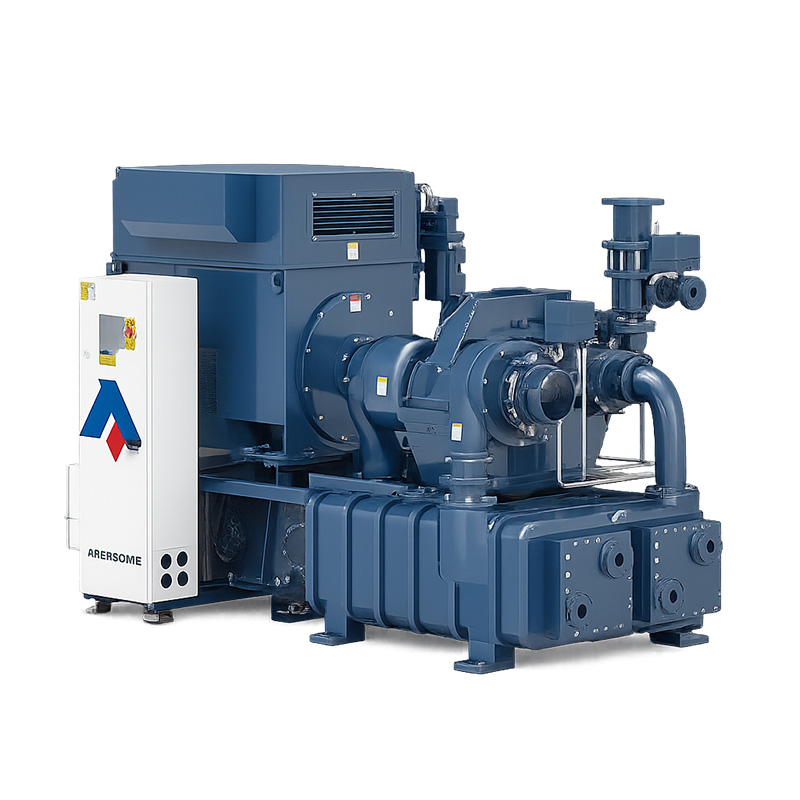
1. Equipment Upgrade to Cut Power Consumption at the Source
Replace conventional fixed-speed air compressors with permanent magnet variable frequency models as the priority. Workshops with volatile air load can achieve an energy-saving rate of 20%–40%. Such units automatically adjust rotational speed based on real-time air demand and eliminate power waste from no-load idling.
Phase out outdated high-energy piston compressors and low-efficiency screw compressors, and adopt Class 1 energy efficiency units. For sites with multiple compressors, install a group control system to automatically distribute loads and prevent simultaneous no-load operation of multiple units.
Equip waste heat recovery devices to capture high-temperature heat generated during air compression. The recovered heat can be reused for workshop heating, hot water for workpiece cleaning and boiler water replenishment. Converting waste heat into usable production energy drastically reduces extra gas and electricity consumption.
2. Pipeline and Air Supply System Optimization to Minimize Air Loss
Carry out a full inspection of the plant’s compressed air pipelines and repair air leaks on pipes, joints and valves. Air leakage losses in most factories can exceed 20%. Regular leak detection and repair is a low-cost, high-return energy-saving measure.
Shorten air supply pipelines and reduce pressure drop caused by elbows and reducers. Appropriately enlarge main pipelines to keep pipeline pressure differential below 0.05MPa. Install air storage tanks to stabilize air pressure and avoid frequent start-stop and load-unload cycles of compressors.
Deploy dryers and filters according to actual demand instead of unnecessarily raising air supply pressure. Adjust workshop operating pressure down to the minimum required value of production equipment. Every 0.1MPa reduction in pressure can cut overall power consumption by 6%–8%.
3. Operation & Maintenance Management and Air Consumption Control to Eliminate Unnecessary Energy Waste
Establish a regular maintenance schedule to replace filter elements and oil separators in a timely manner. Clogged consumables increase unit load and power draw. Maintain good ventilation and heat dissipation in the compressor room, as high ambient temperatures degrade compressor operating efficiency.
Standardize workshop air usage rules: prohibit long-duration ground blowing with compressed air and require air valves to be closed when pneumatic tools are idle. Arrange staggered production shifts and reduce the number of running units during off-peak hours.
Install an intelligent energy consumption monitoring system to track real-time air flow, pressure and power usage for pinpointing waste points. Match the system with automatic air cut-off valves to shut off air supply once equipment stops running, so as to continuously cut invalid energy consumption via refined management.